


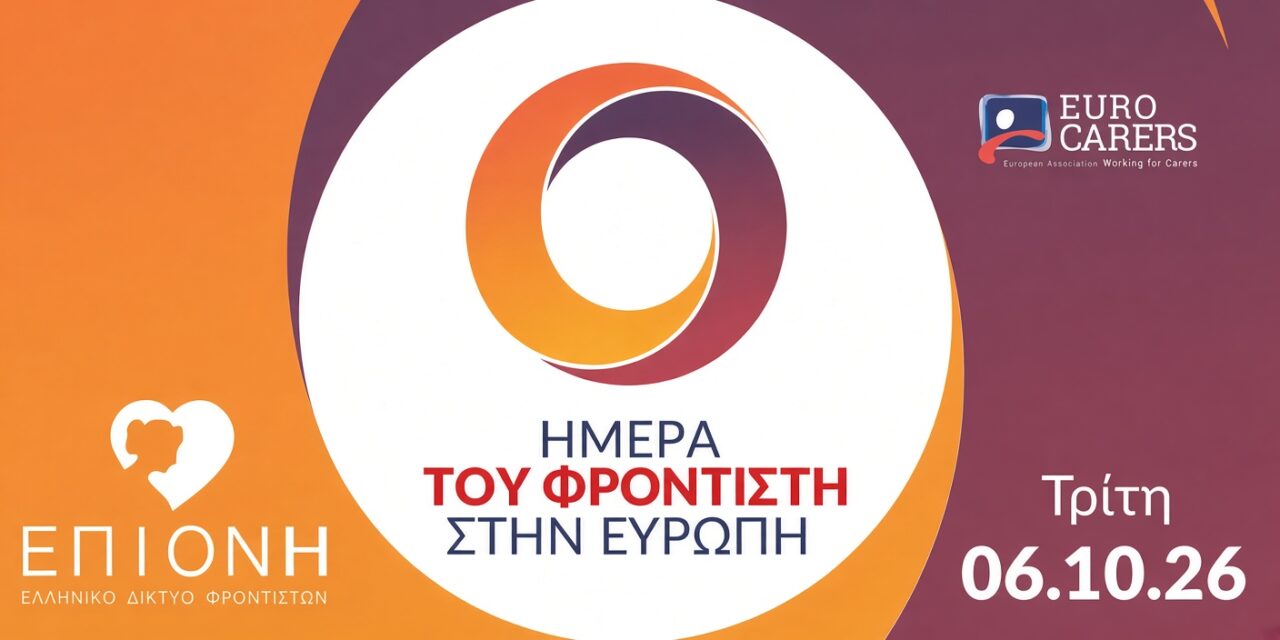
The Greek Carers Network EPIONI successfully held an in-person event to mark European Carers Day on Tuesday, October 6, 2026, at the European Parliament Liaison Office in Greece.
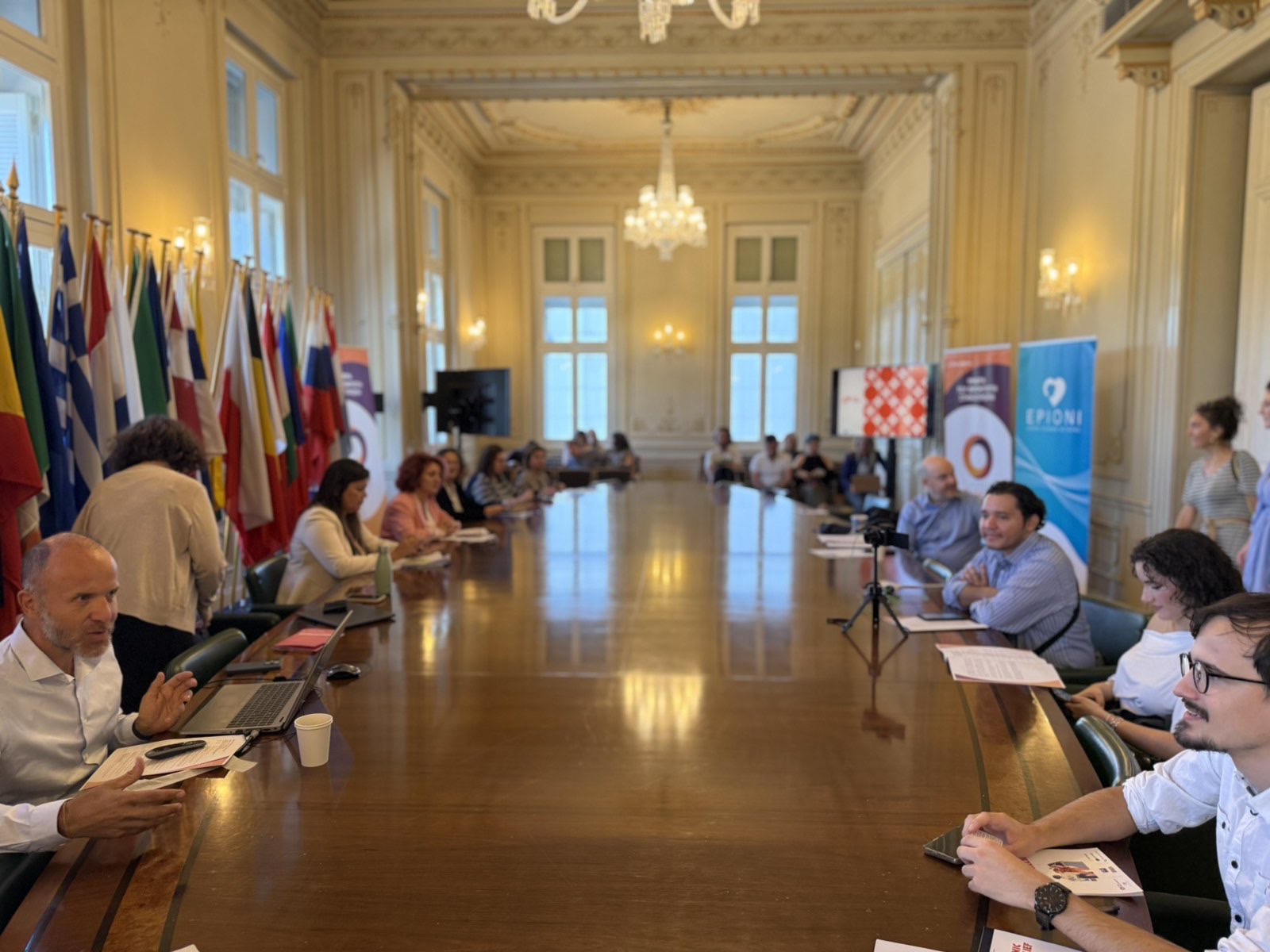
This year’s event highlighted the importance of flexible working arrangements for carers, as well as key issues relating to mental health and family support. It also featured the presentation of the results of the European COMIC-RELIEF project.
The event was honoured by welcoming remarks from Katerina Theofilopoulou, representing the European Parliament Liaison Office in Greece, and Menelaos Theodoroulakis, President of the Board of the ARGO Federation and PEPSAEE.
The programme opened with Spyros Zormpas from EPIONI and Clara Malkassian from ELAN Interculturel, who highlighted the importance of supporting informal carers and promoting young people’s mental health. Subsequently, Panagiota Manou, representing the Ministry of Social Cohesion and Family Affairs, presented policies and initiatives supporting people with disabilities, their families and their carers.
The European results and good practices developed through the COMIC-RELIEF project, focusing on young people’s mental health, were presented by Clara Malkassian, Marguerita Angelucci, Anna Bellan and Adelaida Fanfarová.
Anastasia (Nansia) Gatopoulou from the World Health Organization spoke about collaboration with informal carers to improve the quality of mental health care.
Dr Kelly Panagiotopoulou examined the impact of early psychological trauma, focusing on children growing up with mothers experiencing psychosis, who often take on the role of young carers.
Christos Prapas from the University of West Attica focused on health promotion and support for children and adolescents growing up in families affected by chronic mental health conditions.
Elsa Dimopoulou, representing the Region of Attica, presented mental health initiatives and services designed to support citizens and their families.
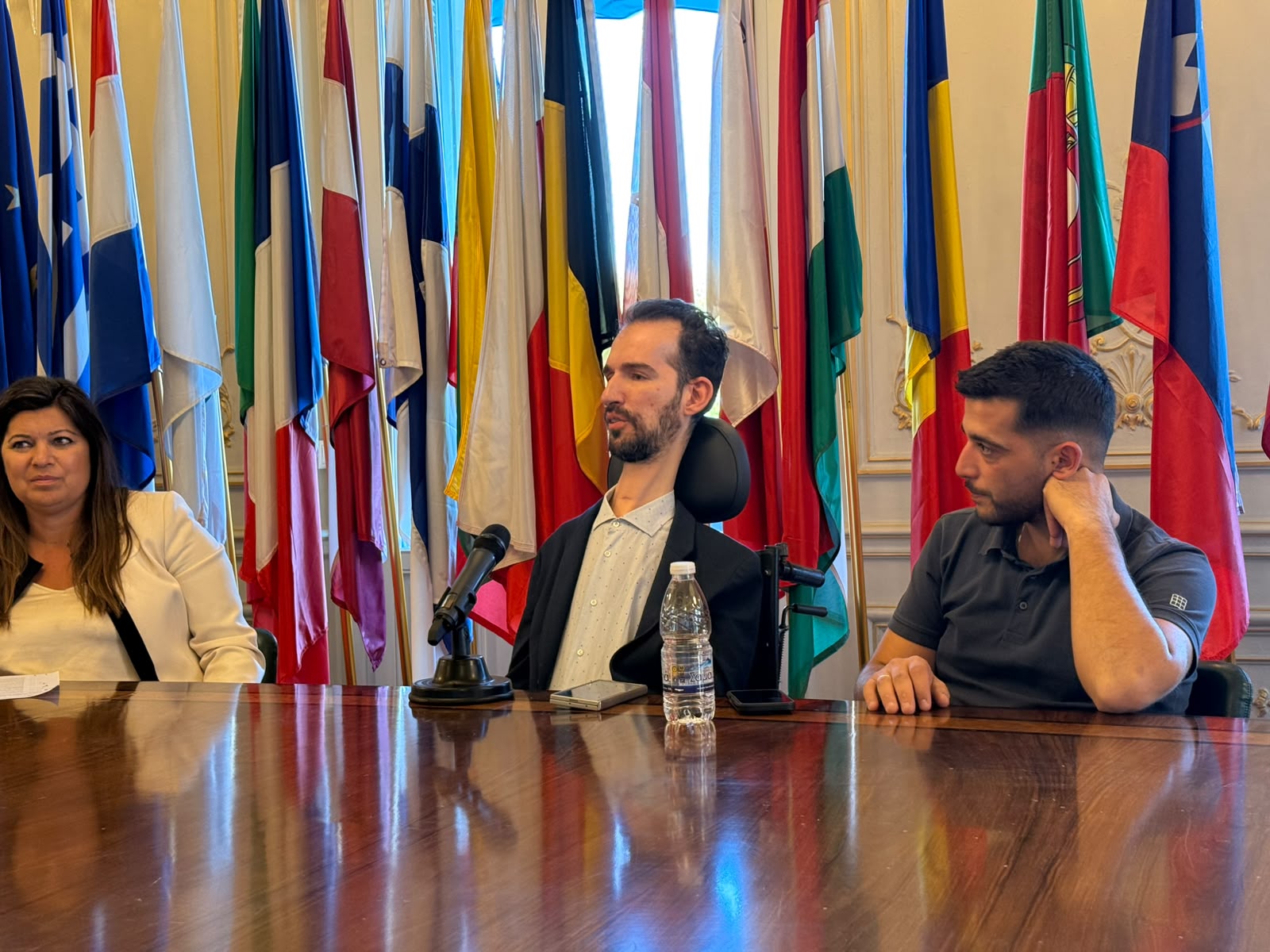
Members of the European Parliament Eleonora Meleti and Elena Kountoura also delivered brief contributions on policies to support carers and promote mental health. Stelios Kympouropoulos contributed in his new role as President of the National Accessibility Authority.
Important Messages from PEPSOPSY and Kapa3
Special mention should be made of the valuable presentations prepared by Kassiani Vrettou, Scientific Coordinator of the PESOPSY residential facility, and Marilia Barka, Psychology student and volunteer at Kapa3. Unfortunately, due to unforeseen circumstances in central Athens and the venue’s closure following a demonstration, they were unable to deliver their presentations in person. Nevertheless, their written contributions conveyed important messages about supporting carers.
From the perspective of Kapa3, the Cancer Patient Guidance Centre, the carer is a central pillar of support for people with cancer. Cancer care does not end at the hospital, and carers often become the invisible coordinators of care, shouldering emotional, practical and work-related responsibilities. Kapa3 provides meaningful support through navigation services and social work, emphasising that no digital innovation can replace human presence and that caring for carers is an integral part of caring for patients.
The material submitted by the Panhellenic Association of Families for Mental Health (PESOPSY) highlighted the immense value of support groups for family carers. Mental health difficulties affect the entire family, often causing anxiety and exhaustion for the relative providing care. These groups create a space where personal experiences can be shared and acknowledged, helping to reduce loneliness and guilt. Their message is clear: no one should have to provide care alone.
Under the Auspices of Leading European and National Organisations
The event was held under the auspices of the European Parliament Liaison Office in Greece, the Ministry of Social Cohesion and Family Affairs, the Region of Attica, the Municipality of Athens, Eurocarers – the European Association Working for Carers, the Hellenic Patients’ Association, the Hellenic Psychiatric Association and the Hellenic Brain Council.
We would like to extend our sincere thanks to all speakers and contributors for their excellent preparation, our sponsors Saronic Nephrology Centre and Pharmaserve-Lilly, our media sponsors, and everyone who attended and joined us in advocating for carers’ rights.
Supporting carers means recognising their contribution, protecting their well-being and ensuring that they have access to the support they need.
Together, we can make carers more visible and help build a society in which no carer is left behind.