



Friday, 5 December 2025 – French Institute of Greece
Mental resilience is a fundamental factor for family caregivers of people living with chronic illness or disability. The caregiving role entails continuous emotional, practical, and social demands, profoundly affecting the caregiver’s daily life. Strengthening resilience through information, psychoeducation, and supportive networks helps reduce stress, prevent burnout, and improve the quality of life for both caregiver and care recipient.
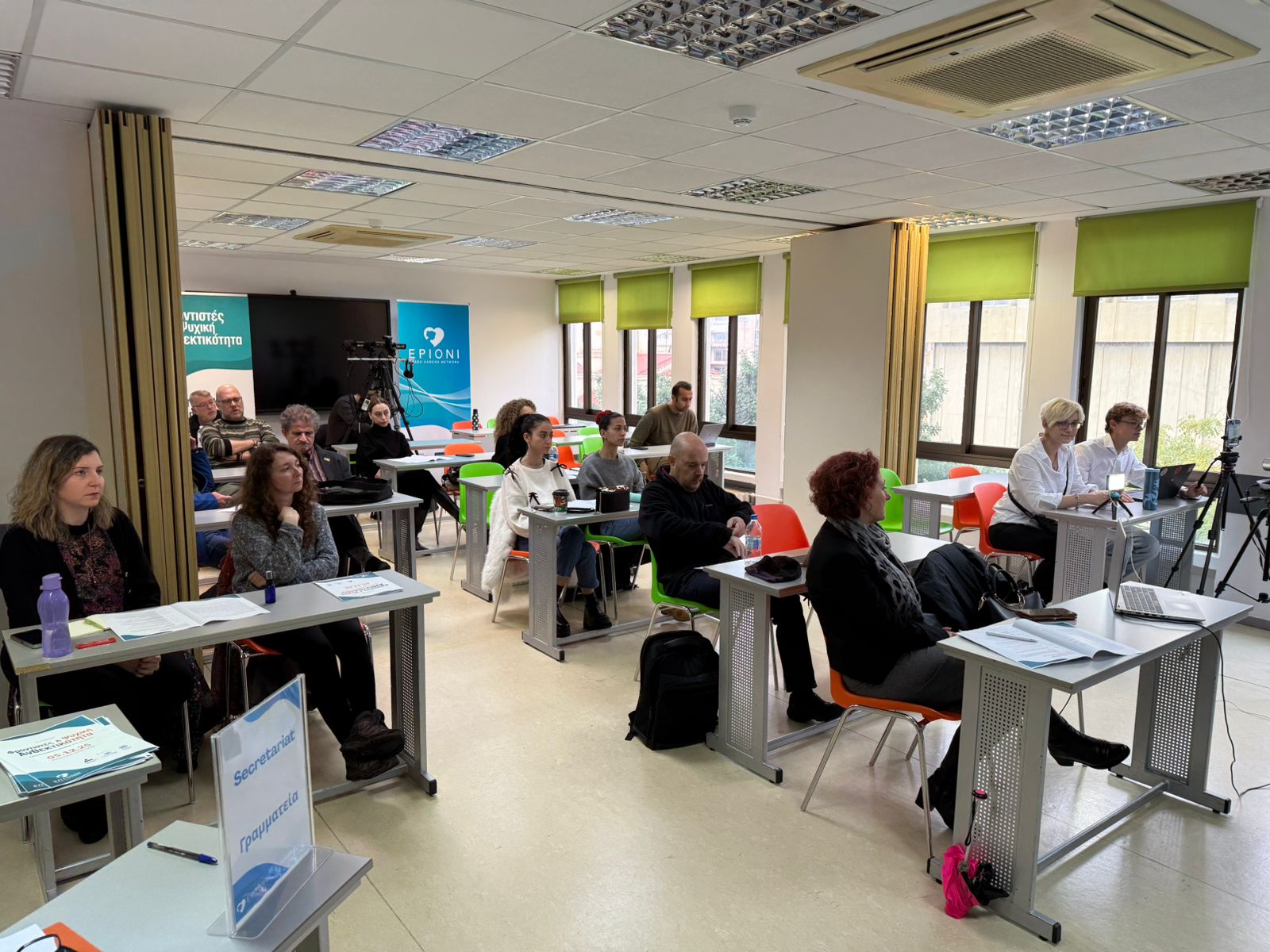
With this in mind, EPIONI organised the 2nd event “Caregivers and Mental Resilience”, highlighting scientific approaches, good practices, and experiential perspectives that empower caregiving by first supporting the caregiver.
The event was held under the auspices of the Region of Attica, the Hellenic Psychiatric Association, and the Hellenic Brain Council, with free admission and the option to participate via Zoom.
The sponsors of the event were Boehringer Ingelheim, Vianex, and the Saronikos Nephrology Center, while the media sponsors were Iatronet, HealthDaily, Daily Health, and Psychology Now.
 Key Points from the Presentations
Enhancing Neuroplasticity for Mental Resilience
Christina Dalla, Professor of Pharmacology, Medical School, National and Kapodistrian University of Athens
Prof. Dalla presented the role of neuroplasticity and cognitive flexibility in coping with stress. Learning, social interaction, art, physical activity, quality sleep, and mindfulness practices all enhance the brain’s adaptive capacity, forming the foundation of mental resilience.
Training Informal Caregivers by Professional Nurses
Ioannis Anastasiou, Nurse – Co-founder of Instahealth
The presentation emphasised that educating caregivers is a crucial empowerment tool. Providing practical skills, psychological support, and structured guidance reduces stress, boosts confidence, and improves the quality of care provided to the patient.
Psychosocial Adjustment in Chronic Kidney Disease
Eirini Zormpa, Deputy Head, Hemodialysis & Peritoneal Dialysis Unit, Attikon University Hospital
Ms. Zormpa highlighted the multifaceted challenges faced by individuals with chronic kidney disease (CKD) and their families—psychological strain, lifestyle restrictions, economic burden, and social limitations. Particular emphasis was placed on family support, caregiver education, active participation in treatment, and strengthening caregiver resilience.
Preventing Somatization – Dance Movement Psychotherapy
Anda Paizi, Dance Therapist – Psychotherapist
Ms. Paizi presented the frequent occurrence of somatic symptoms among caregivers due to chronic stress. Understanding the mind–body connection, practicing mindful breathing, and engaging in dance movement psychotherapy were shown to support stress regulation and enhance resilience.
Care and Self-Care: Two Interconnected Circles
Artemis Aletra, Social Worker – Psychotherapist
Ms. Aletra described caregiving and self-care as two interrelated circles that continuously influence each other. The quality of caregiving depends directly on the caregiver’s ability to care for themselves—an essential prerequisite rather than a luxury.
Through a practical therapeutic example, she illustrated how a small act of self-regulation—a deep breath, relaxing the shoulders, reconnecting with the body—can immediately improve the caregiver–care recipient relationship:
“When I breathe, the relationship breathes.”
She also referred to common challenges (overwork culture, guilt, systemic pressures) and simple strategies for strengthening resilience, such as micro-breaks, boundary-setting rituals, peer support, and self-kindness. The overlap of the two circles creates a space of balance that reduces burnout and empowers the caregiver.
When Caregiving Becomes Identity
Katerina Sameli, Health Psychologist – Systemic Psychotherapist
Ms. Sameli highlighted how long-term caregiving can gradually absorb the individual and become part of their identity, often leading to guilt, burnout, and neglect of personal needs. She stressed the importance of boundaries, support, and self-care, reminding participants that:
“A caregiver is much more than their role.”
The Cycles of Care – A Systemic Perspective
Kyriaki Fotiadou, Psychologist MSc – Systemic Psychotherapist
Ms. Fotiadou presented caregiving as a process embedded in a broader relational system. Mental resilience arises through family and social support, flexible role distribution, open communication, and relational connection. The caregiver is also part of the “cycle of care” and deserves support.
Conclusion
The event underscored that mental resilience is essential for sustainable caregiving. Empowering caregivers through education, support, self-regulation, and strong systemic connections contributes to more humane, effective, and balanced care.
The event was supported by Bodossaki Lectures on Demand – BLOD, where the related material was published. (https://www.blod.gr/lectures/2i-imerida-frontistes-kai-psyhiki-anthektikotita/)